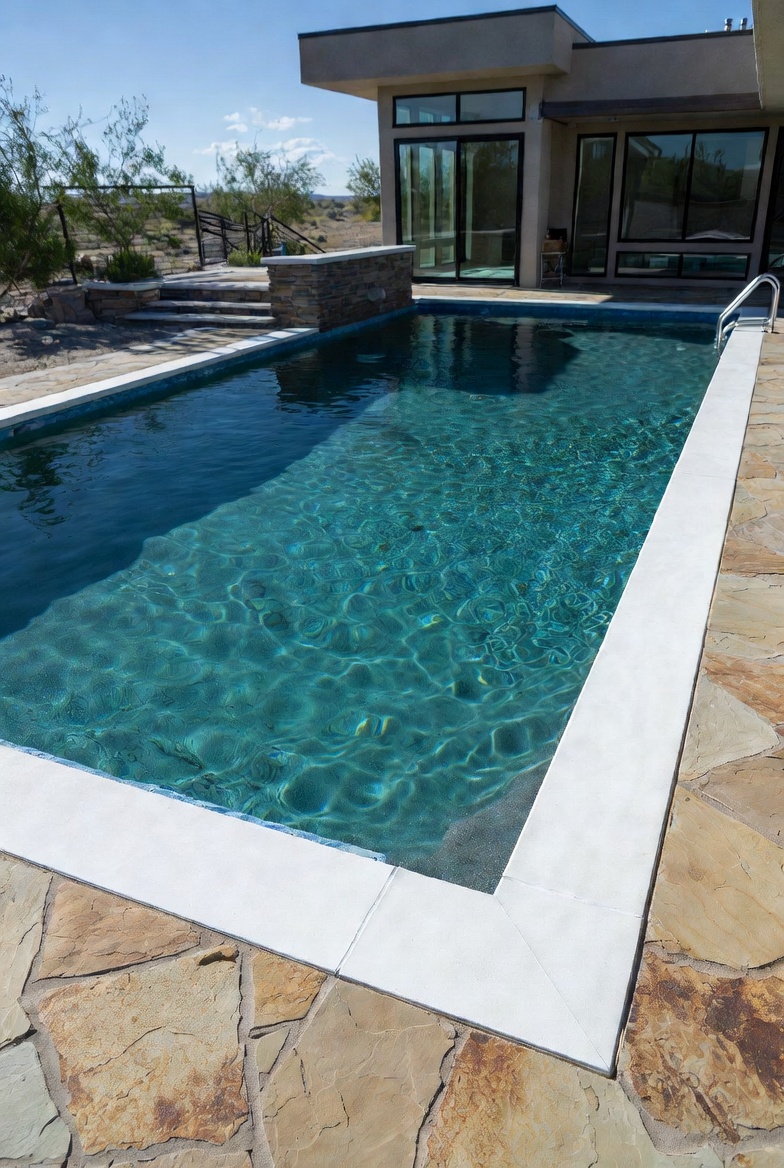
Best window: October to early November. Mild days, cool nights, ideal cure conditions, and your pool is ready for next swim season.
Second-best: March to early April. Same mild temps but contractors fill up fast — book early.
The four resurfacing windows ranked
- October–early November — gold standard. Daytime 65–80°F, overnight 45–60°F. Perfect plaster cure conditions, contractor schedules opening up, pool ready for spring.
- March–early April — close second. Same temp profile but contractors are booked solid as everyone tries to be ready by Memorial Day. Book 6–8 weeks out.
- Late November–February — risky but possible. Mild Southern Utah winters are usually fine, but a single cold snap (overnight below 45°F) during the first 5 days of cure can cause plaster damage.
- May–September — workable but suboptimal. Summer heat accelerates plaster cure unevenly. Pool is out of commission during peak swim season. Contractor lead times are longest.
Why fall is the gold standard
Plaster, quartz, and pebble finishes cure best when temperatures are stable and moderate. Here's what fall in St. George gives you that other seasons don't:
- Daytime highs in the 70s. Warm enough for proper plaster set, not so hot that the surface dries faster than it should.
- Overnight lows in the 50s. Cool enough to slow cure rate (which is good — slow cure = stronger plaster).
- Stable weather. The summer monsoon season has ended; winter cold snaps haven't started.
- Contractor availability. Pool season is winding down. Good crews have schedule openings and aren't rushing jobs.
- Six-month cure runway. By the time you're ready to swim in spring, your finish has had months to fully harden.
Why mid-summer is risky
Mid-summer (June–August) is the season most homeowners think about scheduling — the pool is being used, problems are visible, and there's a desire to "fix it now." But it's the worst time in St. George for these reasons:
- Surface heat. Plaster applied to a 110°F gunite shell cures too fast on contact. The result is shrinkage cracks and uneven color.
- Ambient temperature. Above 95°F, plaster crews have to shift to night application windows, which can affect quality.
- Monsoon storms. A sudden downpour during application is a disaster. Crews routinely postpone in July–August.
- Lost swim season. You're spending the peak swim months without a pool.
- Contractor lead times. Good crews are booked 6–10 weeks out in summer.
Pick a crew that explicitly schedules early-morning application windows (5–9 AM) and has experience with hot-weather plaster. Pebble finishes are more heat-tolerant than plaster.
Winter — sometimes fine, sometimes not
St. George winters are mild compared to most of Utah. December–February daytime temps usually run 50–65°F, which is workable. The risk is overnight cold snaps.
The 50°F rule: for the first 5 days after plaster application, overnight lows should stay above 50°F. Below that, plaster can develop micro-cracks and uneven color.
Check the 10-day forecast before locking a winter schedule. If a cold front is in the forecast, push the start date.
Booking lead time
Contractor scheduling in St. George varies more by season than most markets. Realistic lead times:
| Season | Typical lead time | Notes |
|---|---|---|
| October–November (fall) | 4–6 weeks | Books fast; reserve in August/September |
| March–April (spring) | 6–8 weeks | Highest demand; book in January |
| December–February | 2–4 weeks | Lower demand, more flexibility |
| May–September | 6–10 weeks | Long waits; avoid if possible |
A qualified local licensed contractor will contact you to get your quote started. No obligation.
Frequently asked questions
Can I resurface my pool in mid-summer if I really need to?
Yes — quality contractors do plaster work year-round. But expect a longer wait for scheduling, a slightly higher risk of cure issues, and lost swim time. Pebble finishes handle summer heat better than plaster.
How cold is too cold to resurface?
For plaster: overnight lows below 50°F during the first 5 days of cure increases damage risk. For pebble: a bit more tolerant — down to about 40°F is generally fine. Avoid scheduling when a cold front is in the 10-day forecast.
What about scheduling around a vacation?
If you'll be away during the resurface, that's actually fine — you don't need to be home for the active work. Just make sure someone is responsible for managing cure-period chemistry, or that the contractor includes it in scope.
Does the time of year affect price?
Slightly. Off-peak (December–February) sometimes gets 5–10% better pricing. Peak spring and fall are usually full-rate. Mid-summer occasionally has rush pricing because of the heat-stress on crews.
Free quote for your pool.
A qualified local licensed contractor will contact you to get your quote started. No pressure, no obligation.
Get My Quote