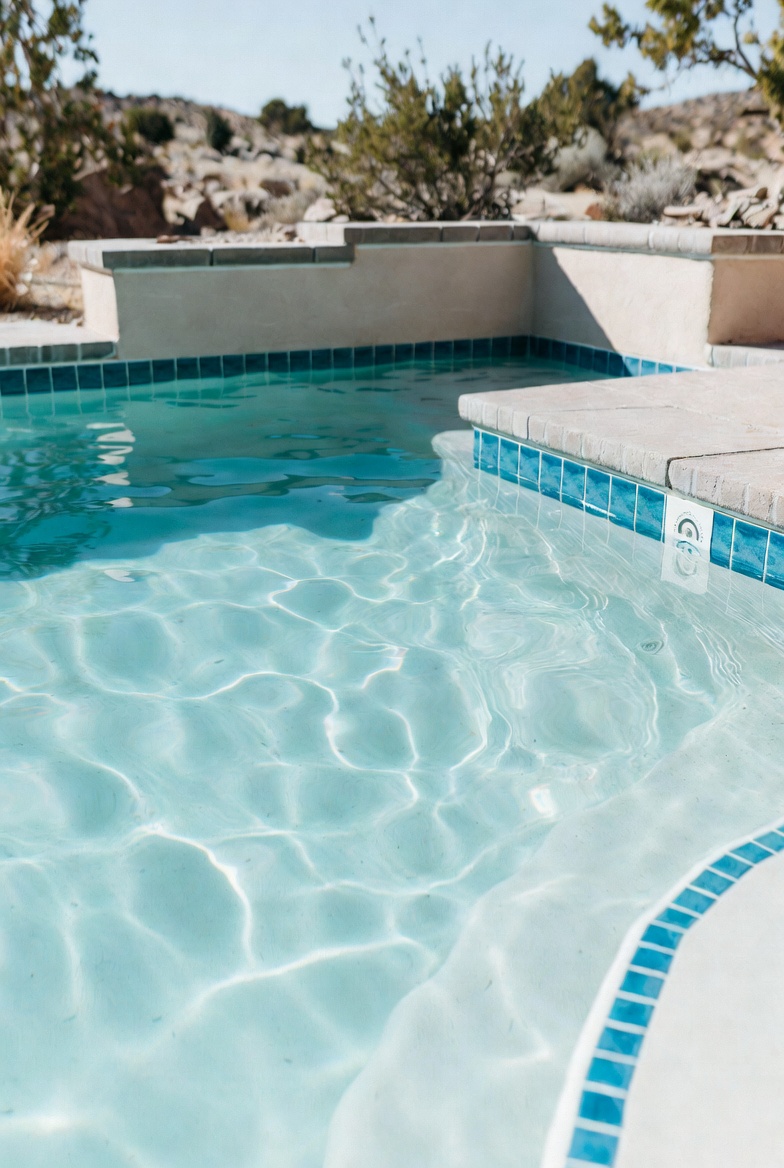
The active work takes 5 to 10 business days from drain to refill. After that, plan on a 28-day cure window during which the new surface fully hardens.
You can swim during the cure period, but water chemistry has to be managed carefully — either by you (with a written plan from the contractor) or by them as part of the scope.
Day 0: Site visit and final scope
Before any drain happens, a reputable contractor visits the pool in person. They tap the existing plaster to identify hollow spots, check the bond beam and coping for damage, look at the tile, and verify pool dimensions. This is also when scope is finalized — exactly which finish, brand, and color, plus any tile or coping work.
If a contractor quotes you sight-unseen, that's a yellow flag. The hidden repair scope is the single biggest reason quotes change after work starts; an in-person walk catches most of it.
Days 1–2: Drain and surface removal
Day 1 starts with draining the pool. In St. George this is regulated — wastewater goes into the sanitary sewer cleanout or a permitted disposal point, not just out into the yard. A good crew handles disposal as part of the scope; a cheap crew leaves it to you.
Once empty, the old surface is removed. There are two main methods:
- Chip-out (preferred): Pneumatic chippers remove the existing plaster down to the gunite shell. Best bond for the new finish. Loudest method.
- Sand or bead-blasting: Abrasive removes the top layer of the existing plaster. Faster, less invasive, but the bond to the new finish is weaker if the old plaster is delaminating in places.
Most quality St. George crews chip out for any resurface where the existing plaster is more than 8 years old or has visible hollow spots.
Days 3–4: Repairs and prep
With the old surface off, the contractor evaluates what's underneath. This is when hidden surprises show up — and when the scope can change. Things they look for:
- Hollow spots / delamination. Areas where the old plaster had separated from the gunite. These need to be cut out and patched before the new surface goes on.
- Structural cracks. Hairline cracks are normal. Anything wider than a credit card edge needs to be stitched (a v-cut and epoxy fill).
- Plumbing issues. If a skimmer, return, or main drain is failing, now is when it gets addressed — it's much harder to fix later.
- Bond beam damage. The top of the pool shell where the coping sits. If it's chipped or cracked, it's repaired now.
After repairs, a bond coat is applied to the shell. This is a thin slurry that promotes adhesion between the existing gunite and the new finish. Crews that skip this step save time but sacrifice finish lifespan.
Day 5: Finish application
This is when the new surface actually goes on. The process depends on the finish:
Plaster
Mixed on-site in batches and troweled onto the shell by hand. A typical pool takes 3–5 hours of active application. Once it starts, it can't stop — the finish has to be completed and the pool refilling within the same window so it doesn't crack from drying out.
Quartz
Same application method as plaster, but with quartz aggregate blended into the mix. Same window.
PebbleTec / pebble finishes
Pebble finishes are troweled on the same way, but with embedded pebble aggregate. After application, the surface is acid-washed within a few hours to expose the pebble texture — this is the step that creates the iconic pebble look.
Days 5–7: Refill and acid wash
The pool starts refilling immediately after application (or after acid wash, for pebble). This is critical — letting the new surface dry out causes shrinkage cracks. The refill happens slowly to avoid disturbing the curing finish; a typical residential pool takes 24–48 hours to fill completely.
Once full, the initial water balance is set: pH around 7.4, alkalinity around 100 ppm, calcium hardness around 250 ppm. This is the starting point for the 28-day cure.
Days 7–35: The 28-day cure
This is the part most homeowners don't know about. The new finish isn't truly hardened when the pool is refilled — it takes about 28 days for cement-based finishes (plaster, quartz, pebble) to fully cure under water. During this window:
- You brush the entire pool every day for the first 14 days. This removes plaster dust that's released as the surface cures and prevents it from settling into permanent staining.
- You test and adjust water chemistry daily for the first 2 weeks. pH wants to rise during cure; alkalinity drifts; calcium hardness needs to be brought up gradually.
- No automatic vacuums for the first 14 days. They can wear grooves into the soft surface.
- You can swim — but no rough play, no diving. The surface is curing under your feet.
Skipping or rushing the cure plan is the single most common reason a fresh resurface fails within 2–3 years. Get the chemistry plan in writing as part of your contract, or have the contractor manage it for you.
What can go wrong (and how to avoid it)
- Skipping hollow-spot repair. New finish over delaminated old finish always fails. Insist on tap testing before the new application goes on.
- Application during extreme heat. Mid-summer St. George plaster application can cure too fast and crack. Schedule for spring or fall when possible.
- Cold-snap cure. If overnight temps drop below 50°F during the first 5 days, plaster can crack. Hurricane and Cedar City are more exposed to this than St. George.
- Bad water chemistry during cure. Aggressive water (low calcium, low pH) eats fresh plaster surface in the first 30 days. Follow the cure plan.
- Streaking or mottling. Usually caused by uneven troweling or inconsistent mix. A quality crew shouldn't have this problem; if you see streaking after refill, raise it with the contractor under their workmanship warranty.
A qualified local licensed contractor will contact you to get your quote started. No obligation.
Frequently asked questions
Can I be home during the resurfacing process?
Yes — there's no reason to leave. Crews are usually on-site 7 AM to mid-afternoon for the active days. The drain water and dust may smell briefly during the chipping phase but it's not hazardous.
Do I need to do anything during the 28-day cure?
If the contract puts it on you: yes, daily brushing for 2 weeks plus daily chemistry testing. Get a written plan. If the contractor manages it, they'll come back 2–3 times during the cure window.
Can I drain and refill the pool myself to save money?
Not really. The contractor handles disposal under the right permits, and starting the refill at the right moment is timing-critical. The few hundred dollars you'd save isn't worth the risk.
What if I'm not happy with how it looks after cure?
If there's streaking, mottling, or unexpected discoloration, raise it with the contractor under their workmanship warranty. Most issues are addressable. The cure window is when problems become visible — that's why warranties typically run a year.
Free quote for your pool.
A qualified local licensed contractor will contact you to get your quote started. No pressure, no obligation.
Get My Quote