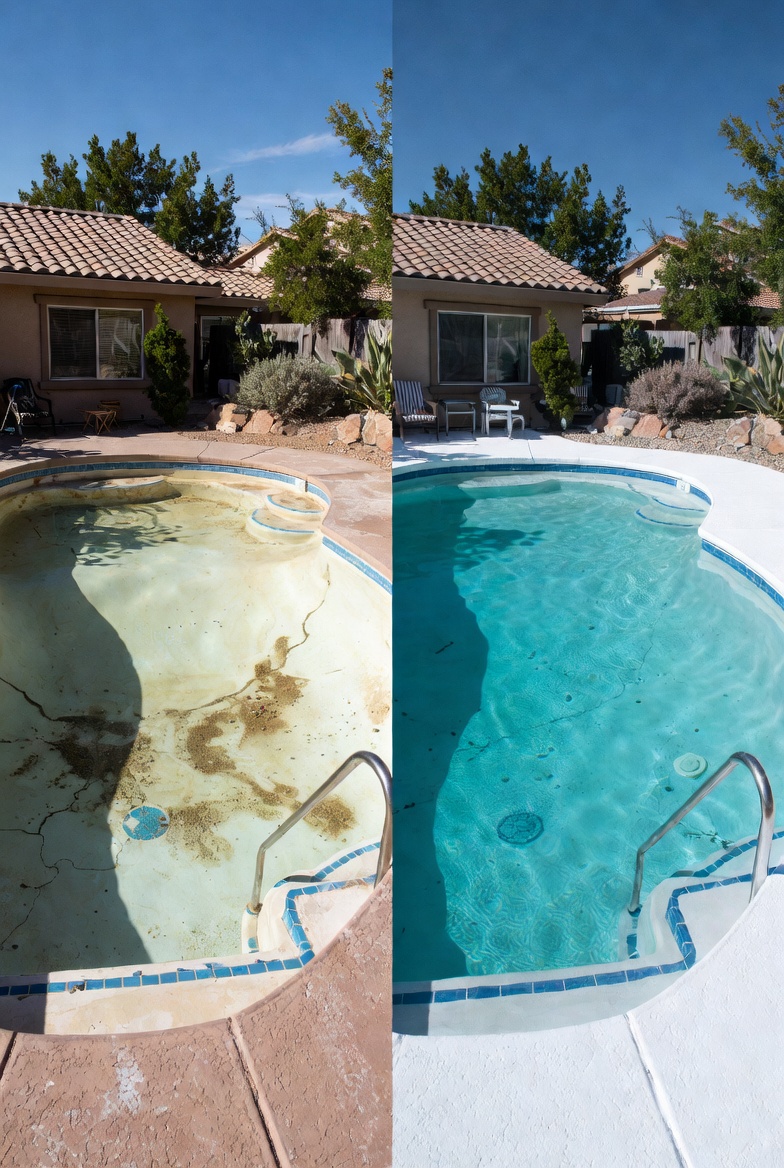
The most common surprise add-ons in St. George: hollow-spot repair, structural crack stitching, plumbing rework, water disposal fees, and 28-day cure chemistry. Together they can add $1,500–$4,000 to a quote.
Most surprise costs aren't shady — they're real work that wasn't in the original scope. The fix is asking the right questions up front so you know what's bundled and what isn't.
Hollow-spot repair
When the old plaster gets chipped off, the contractor finds out how much of the existing surface had quietly delaminated from the gunite shell. Those hollow areas need to be cut out and patched before the new finish goes on — otherwise the new surface fails within 1–3 years.
Typical add-on: $400–$1,500 depending on how widespread it is. A well-written quote includes a baseline allowance ("up to 25 sq ft of hollow-spot repair included; additional billed at $X/sq ft").
Why it surprises people: hollow spots aren't always visible until removal. A pool that looks fine on the surface can have 30–50 sq ft of delamination underneath.
Structural crack stitching
Hairline cracks are cosmetic. Anything wider than a credit card edge is structural and needs to be v-cut and filled with a flexible epoxy before resurfacing. Skip this step and the new finish cracks along the same lines within months.
Typical add-on: $200–$800 per linear foot of structural crack, depending on depth.
Why it's worth paying: a cracked shell can leak hundreds of gallons of water a week into your soil. In St. George that doesn't just cost you water — it can undermine the pool's structural foundation.
Plumbing and skimmer issues
Resurfacing is the only time the pool is empty long enough to easily fix plumbing issues. So when a contractor finds a failing skimmer, a return jet that's leaking, or a main drain that's no longer code-compliant (a real issue in pre-2008 builds), they often raise it during the resurface window.
Typical add-on: $300–$2,000 depending on the fix.
What's reasonable: the contractor should flag the issue, explain the alternatives (fix now while pool is empty, vs. fix later as a separate job), and get your written approval before doing the work. A good crew won't do it as a surprise.
Federal pool safety law (VGB Act, 2008) requires anti-entrapment drain covers and dual-drain systems. Pools built before that often have non-compliant drains. Many St. George resurfacers will mention it during the resurface so it gets fixed while the pool is open — it's a legitimate flag, not an upsell.
Water disposal and refill
Draining a residential pool in St. George means moving 15,000–25,000 gallons of treated water somewhere. City rules require it to go into the sanitary sewer cleanout or a permitted disposal point — not into the street or yard.
Typical add-on: $100–$300 for disposal handling. Some contractors include this; some leave it as "owner responsibility," which means you're either pumping it yourself or paying extra to have it done.
Refill water: at St. George water rates, 20,000 gallons of refill water costs roughly $50–$120. Almost always your responsibility.
Cure-period chemistry
The 28-day cure window after refill requires daily attention — pH and alkalinity adjustments, calcium hardness build-up, careful brushing. Some contractors include this in scope (they come back 2–3 times during the cure window). Others hand you a checklist and walk away.
Typical add-on if not included: $200–$500 if you hire a pool service to do it, or roughly $80–$120 in chemicals if you DIY.
Why it matters: cure-period chemistry is the single biggest determinant of how long the new finish lasts. Getting it wrong shortens lifespan by years.
Tile and coping discoveries
Once the pool is drained, things become visible that weren't before — popped tiles, hairline coping cracks, deck-to-pool expansion joint failures. These don't have to be fixed during the resurface, but they're usually the right time to do it because the pool is already empty.
Typical add-on: $1,500–$4,500 for waterline tile replacement; $2,500–$7,000 for coping repair or replacement.
How to handle it: ask up front whether the contractor will give you the option to add tile/coping work mid-job, and at what pricing. The answer should be "yes, with written change orders and pricing locked in advance."
How to avoid surprise costs
- Insist on a written, line-itemed quote. "Resurface pool $8,500" is not a quote. You want surface removal method, included repairs, what's contingent on what they find, plus pricing for the most common add-ons.
- Ask about hollow-spot allowance. A baseline of 20–30 sq ft included is reasonable.
- Ask about structural cracks. Does the contractor have a baseline allowance for stitching, or is it 100% additional?
- Ask about plumbing. If they find issues, do you get a heads-up and written change order? Or do they just do the work and bill you?
- Ask who handles cure chemistry. If it's you, factor in $80–$120 of chemicals and 30 minutes a day for 2 weeks.
- Compare line items across quotes. Quotes that look dramatically different usually differ on what's bundled — not on the headline finish price.
A qualified local licensed contractor will contact you to get your quote started. No obligation.
Frequently asked questions
How much should I budget for surprise costs?
Plan for an extra 10–20% above the quoted finish price as a contingency. For a $9,000 resurface, that means having $10,000–$11,000 set aside. Most jobs don't hit the upper bound, but having the cushion makes change orders easier.
Can I refuse to pay for add-ons I didn't approve?
Yes — but the contractor can legitimately bill you for work they did, even if you didn't pre-approve it. The protection is asking for written change orders before extra work starts. If a contractor does extra work without your written approval and demands payment, that's a contract dispute you can push back on.
Are surprise costs a sign of a bad contractor?
Not always. Sometimes the pool just has issues that weren't visible in the original walk-through. A bad contractor is one who hides the issues, bills without warning, or pressures you to approve extras on the spot. A good contractor surfaces the issues with written documentation and lets you decide.
What if the surprise cost is more than I can afford?
You have options: postpone the optional work (tile, coping) to a future drain; do the minimum required repairs and skip the upgrades; or pause and get a second opinion on whether the repair is truly necessary. Don't let yourself be pressured into approving on the spot.
Free quote for your pool.
A qualified local licensed contractor will contact you to get your quote started. No pressure, no obligation.
Get My Quote