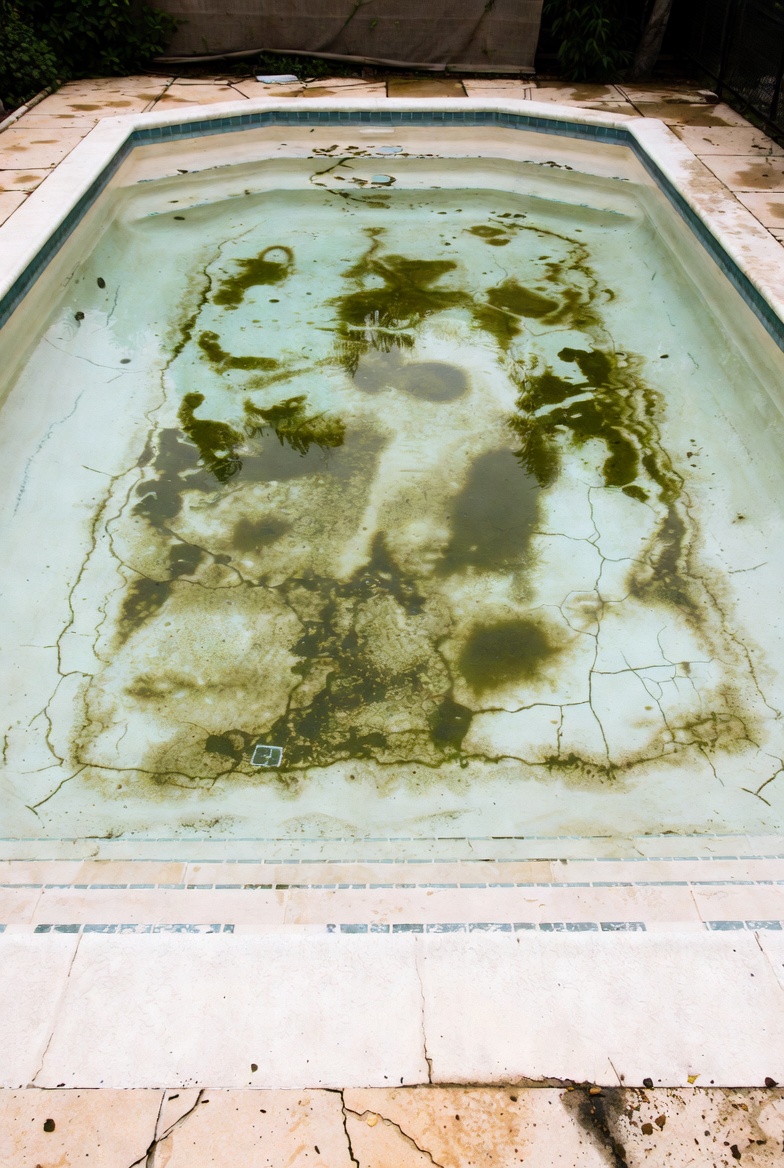
If you have two or more of these signs, your pool surface is at end of life and a full resurface is overdue. One sign alone is sometimes patchable.
Hard rule: if the surface is rough enough to scrape skin or bathing suits, it's resurfacing time. No amount of cleaning fixes that.
1. Rough or sandpapery feel
Run your hand along the wall. A healthy plaster or pebble surface should feel smooth (or texturally consistent for pebble). If it feels like fine sandpaper, your surface has lost its top layer to etching — typically from aggressive water chemistry, age, or both.
Why it matters: rough surfaces scrape feet and bathing suits, hold debris, and worsen quickly once they start. This isn't a cosmetic issue you can ignore.
What to do: if it's mild and localized, an acid wash can buy you 1–2 years. If it's pool-wide, you're looking at resurfacing.
2. Chalky residue on hands
Touch the wall, then look at your fingers. Are they coated with a fine white powder? That's the plaster surface dissolving, and what's coating your hands is what's leaving the wall.
Chalking is more common in St. George because of our hard water + UV combination. Once it starts, it accelerates — the dissolved plaster raises the pool's calcium hardness, which makes water chemistry harder to control, which causes more dissolution.
What to do: chalking is usually pool-wide by the time you notice it. Plan a resurface within 12 months.
3. Visible cracks or crazing
There are two kinds:
- Crazing — fine, web-like surface cracks. Cosmetic, not structural. Almost all older plaster has some crazing. It looks worse than it is.
- True cracks — anything you can fit a credit card edge into. These point to either substrate movement or significant surface failure. Need to be addressed during a resurface.
If your plaster has crazing alone, you have time. If you have multiple cracks longer than 6 inches each, plan a resurface and have the contractor evaluate whether stitching is needed.
4. Persistent staining that won't lift
Stains in plaster come in flavors: iron (rust-orange), copper (blue-green), organic (brown/black, often from leaves or bugs), and calcium (white scale buildup).
Fresh stains usually respond to spot-treatment chemicals. Stains that won't respond, or that come back within weeks, signal that the staining has penetrated through the surface layer. At that point, only resurfacing returns the pool to bright.
By the time you have persistent staining, you almost always also have chalkiness, roughness, or color loss elsewhere. They're symptoms of the same problem: a surface at end of life.
5. Hollow spots when you tap
Take a screwdriver or small hammer and gently tap the walls and floor of the pool (after draining a bit so you can reach the wall safely). Most of the surface should sound solid. If sections sound hollow or drum-like, the plaster has delaminated from the gunite shell underneath.
This is the most serious of the seven signs. Delaminated areas can't be patched effectively — they'll keep spreading. And applying a new surface over them traps the problem and dramatically shortens the new finish's life.
What to do: resurface and insist that hollow areas are properly cut out and patched before the new surface goes on.
6. Color loss or mottling
Blue tinted plaster fading to gray. Gray turning to white. Uneven blotches where the color used to be consistent. These are all signs of UV damage compounded by surface dissolution.
In St. George specifically, UV is intense enough that tinted plaster typically loses noticeable color by year 8. By year 10 it's often unmistakable. If your once-blue pool now reads gray-white, the surface is at end of life regardless of what the rest of the pool looks like.
7. Rising water-chemistry demand
If your pool is suddenly demanding more chlorine, more conditioner, or more acid to maintain the same readings — and you haven't changed anything about how you use the pool — the surface may be the cause.
Dissolving plaster releases calcium into the water and raises pH. To compensate, you add more acid. The more acid you add, the more the surface dissolves. Once you're in this loop, you're treating a symptom; resurfacing fixes the cause.
How to tell if chemistry demand is surface-driven: compare your current chemical usage to a year ago. If acid demand is up 30% and pH still rises faster than it used to, your surface is leaching.
A qualified local licensed contractor will contact you to get your quote started. No obligation.
Frequently asked questions
How many signs do I need before resurfacing?
One sign isn't conclusive. Two or more, especially if one of them is roughness, chalking, or hollow spots, is the threshold. If you're seeing four or more, the resurface is overdue and you're risking damage to the pool structure underneath.
Can I just patch and keep going?
Sometimes, for one isolated issue. Acid wash for mild roughness, spot-stain treatment for fresh staining, plaster patches for localized cracks. But if multiple signs are present, patching is throwing good money after bad.
How long after these signs appear can I wait?
Roughness, chalking, and color loss can typically wait 6–18 months without serious damage. Hollow spots and structural cracks should be addressed within 6 months — they get worse fast and can damage the gunite shell underneath.
What if my pool looks fine but I haven't resurfaced in 12 years?
In St. George, that's overdue regardless of how it looks. Some surfaces fail quietly — the rough feel develops gradually and you stop noticing. Have a contractor walk it and tap-test.
Free quote for your pool.
A qualified local licensed contractor will contact you to get your quote started. No pressure, no obligation.
Get My Quote