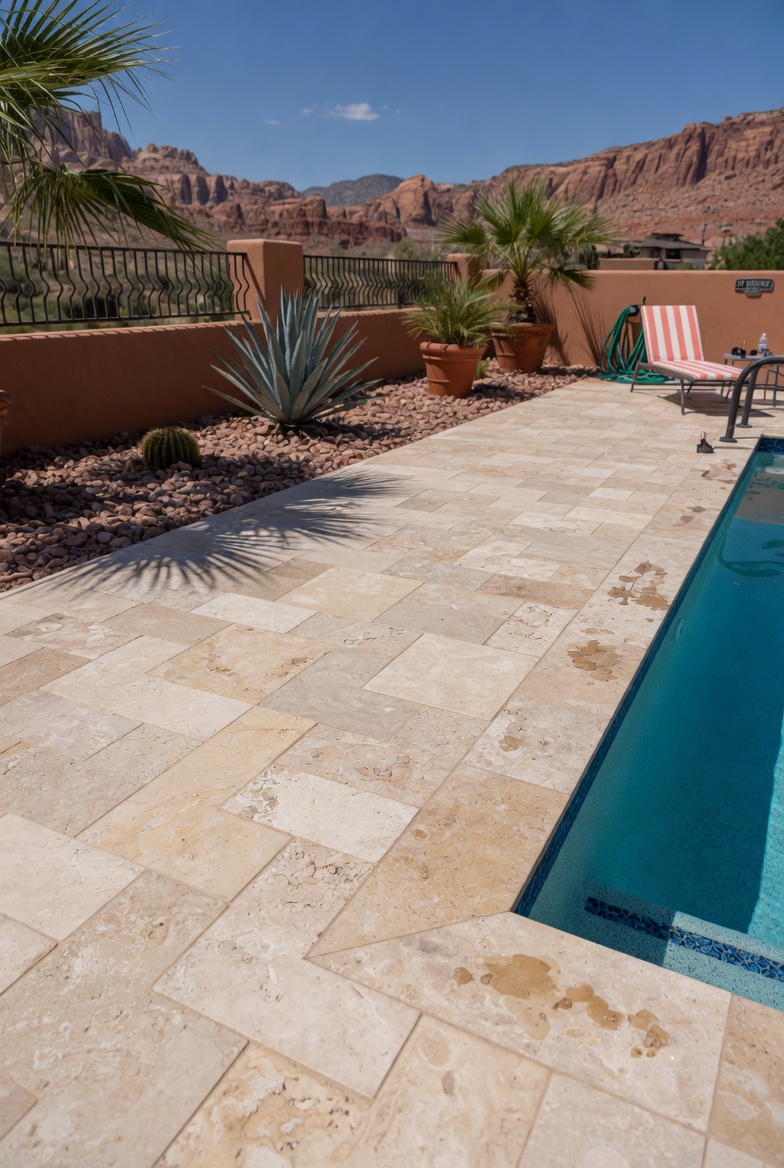
Pool deck resurfacing with pavers means laying travertine, brick, concrete, or natural-stone pavers directly over your existing concrete pool deck. You skip the demolition cost, get a premium look, and end up with a deck that runs 20–40°F cooler in summer and lasts 20+ years.
Typical St. George cost: $10–$22 per square foot installed ($5,000–$14,000 for most residential pool decks). 2–3× the price of Kool Deck or acrylic coatings, but 3–4× the lifespan and a meaningfully better feel underfoot.
What "resurfacing with pavers" actually means
When most homeowners search "pool deck resurfacing," they find offerings for coating-based services — Kool Deck spray, acrylic concrete overlays, polyaspartic sealers. These add a thin layer (1/8 inch or less) of new material over the existing deck.
Paver resurfacing is a different category. Instead of a coating, your contractor lays real pavers — typically travertine, brick, concrete, or natural stone — directly over your existing concrete deck. The pavers are 1/2 to 2 inches thick and bonded with mortar or a thin sand bed.
The end result is structurally and visually like having a stone-paver deck originally installed, at a fraction of the cost of demolishing and starting over.
Your existing concrete becomes the "subbase" for the new paver surface. As long as the concrete is structurally sound — no major cracks running edge-to-edge, no significant settling — you can put a premium 20+ year paver finish directly on top.
Pavers vs. Kool Deck and acrylic coatings
This is the question every St. George homeowner faces when their deck is failing. Both approaches "resurface" — but they're different products with different economics.
| Kool Deck / acrylic coating | Paver overlay | |
|---|---|---|
| Upfront cost (avg residential) | $1,500 – $5,000 | $5,000 – $14,000 |
| Cost per sq ft | $4 – $8 | $10 – $22 |
| Lifespan in St. George | 5 – 8 years | 20+ years |
| Cost over 20 years | $4,500 – $15,000 (3 redos) | $5,000 – $14,000 (one install) |
| Summer temperature | Cooler than bare concrete | 20–40°F cooler still |
| Feel underfoot | Textured acrylic | Natural stone |
| Spot repairs | Difficult — usually re-do the area | Lift and replace individual pavers |
| Fades in UV | Yes, noticeably by year 4–5 | No (natural stone holds color) |
| Resale impact | Neutral | Net positive — buyers see premium finish |
Honest take: if you're planning to sell within 2–3 years and just need the deck to look good for the listing, Kool Deck or acrylic coating is the smart move. If you're planning to enjoy the pool for 10+ years, the 20-year math favors pavers every time — same total cost, dramatically better experience.
For comparison, see our overview of pool deck resurfacing options (all materials) and the dedicated pool pavers page.
5 paver materials, ranked for St. George
1. Travertine
The single most popular premium choice in St. George — and for good reason. Travertine is a natural limestone with a distinctive light, neutral color palette (ivory, walnut, silver). It's noticeably cool to the touch even in mid-summer heat. The tumbled or honed surface offers good slip resistance.
Cost: $12–$22/sq ft installed. Lifespan: 25+ years. Best for: most St. George backyards — ties beautifully into red rock and sandstone.
2. Brick pavers
Classic, durable, and the tie-in to St. George's red-rock landscape is unmistakable. Brick comes in red, charcoal, and sand tones. It stays moderately cool, has excellent slip resistance, and ages beautifully.
Cost: $10–$16/sq ft installed. Lifespan: 25+ years. Best for: traditional and southwestern home styles, smaller backyards, budget-conscious premium installs.
3. Concrete pavers
Manufactured pavers in dozens of shapes, sizes, and colors. The most affordable paver option; can be made to look like stone or brick at lower cost. They're not as cool underfoot as natural stone but still beat poured concrete handily.
Cost: $8–$14/sq ft installed. Lifespan: 20–25 years. Best for: getting paver durability and the lift-and-replace benefit at a more affordable price.
4. Flagstone
Irregular natural-stone slabs cut to fit. Premium look, organic feel, ties into landscape better than any other option. Higher install cost because of the cutting and fitting work, but the result is custom and one-of-a-kind.
Cost: $16–$28/sq ft installed. Lifespan: 30+ years. Best for: Kayenta, Entrada, and other architectural-control communities where the landscape demands a custom approach.
5. Granite, bluestone, and other premium natural stone
High-end stone for custom builds. Distinctive colors and finishes. The longest-lasting and most distinctive look you can put on a pool deck.
Cost: $20–$35/sq ft installed. Lifespan: 30+ years. Best for: premium custom homes where the deck is a featured architectural element.
The install process, step by step
- Inspection and quote. The contractor visits, tap-tests your existing concrete deck for hollow spots and structural integrity, measures the area, discusses material options, and provides a written quote.
- Existing surface prep. Any failing coatings (peeling Kool Deck, loose paint) are removed. Cracks are filled with flexible repair compound. The deck is power-washed clean.
- Edge restraints. Permanent edge restraints are installed around the perimeter to keep pavers from migrating outward over time. Often integrated into existing coping or new poured edges.
- Bond coat or mortar bed. A 1/2-to-1-inch mortar bed is applied for travertine and stone pavers. For concrete and brick pavers, a thinset mortar or polymeric sand setting bed is used.
- Paver installation. Pavers are laid in the chosen pattern (running bond, herringbone, French pattern, etc.) with consistent joint spacing. Cuts at edges and around coping are made on-site with a wet saw.
- Joint filling. Joints are filled with polymeric sand (resists weed growth and stays in place) or mortar grout, depending on the install method.
- Sealing. The entire surface is sealed to resist stains, slow water absorption, and lock in color. Most installs include the first seal coat; periodic resealing every 2–3 years extends life.
- 48-hour set, 7–14 day cure. The deck is usable about 48 hours after final install. Full cure (where you can stack furniture, run heat lamps, etc.) takes 7–14 days.
Free quote from a qualified, licensed Southern Utah contractor. They'll inspect your deck and recommend whether pavers or coating is the right call.
Cost breakdown by material and pool size
Cost scales primarily with deck square footage and material. Most St. George residential pool decks fall between 400 and 800 sq ft. Here's typical 2026 pricing:
| Material | Small deck (~400 sq ft) | Average deck (~600 sq ft) | Large deck (~900 sq ft) |
|---|---|---|---|
| Concrete pavers | $3,200 – $5,600 | $4,800 – $8,400 | $7,200 – $12,600 |
| Brick pavers | $4,000 – $6,400 | $6,000 – $9,600 | $9,000 – $14,400 |
| Travertine | $4,800 – $8,800 | $7,200 – $13,200 | $10,800 – $19,800 |
| Flagstone | $6,400 – $11,200 | $9,600 – $16,800 | $14,400 – $25,200 |
| Premium natural stone | $8,000 – $14,000 | $12,000 – $21,000 | $18,000 – $31,500 |
Additional cost factors:
- Removing existing coatings: $1–$3/sq ft to grind off old Kool Deck or peeling acrylic before paver install.
- Repairing structural cracks: $200–$800 per linear foot, depending on depth and stitch method.
- New coping integration: $20–$60 per linear foot if you're updating coping at the same time (often the right call for a fully finished look).
- Drainage adjustments: Sometimes needed because pavers raise the deck height ~1 inch — slope is corrected during install.
For deep cost detail on the surface side, see our 2026 pool resurfacing cost guide.
Bundling with a pool resurface
Half our St. George customers who do paver decks also resurface the pool surface at the same time. There are three concrete reasons:
- One mobilization. The contractor's already on-site for several days; bundling avoids a second setup and saves you ~10–15% on the total.
- One drain. The pool's already empty for the resurface. Coping and waterline tile work that's normally a "next time" item can be done at the same time.
- Coherent design. Picking the new finish color, paver material, and coping style as a single design decision results in a more cohesive backyard than doing them years apart with different contractors.
If you're considering both, mention it on your quote request — the matched contractor will give you a bundle price that's almost always cheaper than two separate quotes.
Why this works especially well in St. George
The heat math is dramatic
A dark broom-finished concrete deck in St. George can hit 130–145°F by 2pm in July. Kool Deck might bring it down to 105–115°F. Light travertine or brick pavers run 95–105°F in the same conditions. That's the difference between "too hot to walk on" and "fine in flip-flops."
The aesthetic match is unbeatable
Red rock cliffs, sandstone bluffs, and the desert palette of St. George do not flatter gray broom-finished concrete. They do flatter travertine, brick, and flagstone. A paver deck pulls your backyard into the landscape rather than fighting against it. Homes in Ivins (Kayenta), St. George (Stone Cliff, Entrada), and Hurricane (Sand Hollow area) consistently choose pavers for this reason.
HOAs love them
Most St. George master-planned communities (SunRiver, Coral Canyon, The Ledges) prefer pavers over Kool Deck or stained concrete for backyard renovations because they read as "permanent improvement" rather than "coating that will need redoing in 5 years." ARC approval is typically faster.
UV is brutal on coatings
Our UV index runs 1.5–2× higher than the national average. Acrylic coatings fade noticeably by year 4–5, which is why we see so many homeowners on their second or third Kool Deck redo. Natural-stone pavers don't fade. The math against coatings gets worse the longer you stay.
Pavers are not the cheap-est resurface option, and we won't pretend they are. If your budget is $3,000, Kool Deck is the right call. But over 20 years of St. George heat and UV, the same homeowner who does a Kool Deck install today will spend roughly the same total amount doing 3 reinstalls. The paver homeowner spent that money once and stopped thinking about the deck.
Frequently asked questions
How do I know if my existing deck is sound enough for pavers?
The contractor tap-tests the deck during the quote walk. They listen for hollow areas (delamination from the soil below), check for cracks wider than a credit card, and look for major settling or slope issues. About 85% of St. George pool decks pass this inspection and are good candidates. The other 15% need repair work first or, occasionally, a full deck demo.
Will the new deck height match my coping?
Pavers raise the deck by 1–2 inches depending on material. Coping is usually adjusted (raised or replaced) to match. The contractor will plan this during the quote so the transition looks intentional, not slapped together.
What's the maintenance schedule?
Sweep regularly. Re-sand joints every 3–5 years (re-installing polymeric sand). Reseal the surface every 2–3 years for natural stone, every 4–5 for concrete pavers. If a paver cracks, lift it out and drop a new one in — about 10 minutes of work.
Can pavers be installed in winter?
In St. George, yes — mild winters are workable. Mortar bed installs need overnight lows above 40°F for the first 3 days, so a cold-snap forecast may push the start by a few days. Polymeric-sand installs are more weather-tolerant.
Do I need permits for paver resurfacing?
For a straight resurface (no structural changes, no expansion of the deck footprint), permits are usually not required in St. George city limits or Washington County. New deck construction, raised decks, or expansions do need permits — your contractor will handle that.
How is this different from "stamped concrete that looks like pavers"?
Big difference. Stamped concrete is one continuous slab textured to mimic paver lines — it's a coating-based product with all the same lifespan and cracking issues as poured concrete. Real pavers are individual units. You get genuine stone or brick, true lift-and-replace repairs, and dramatically better heat performance.
Can I get paver resurfacing on a budget?
Yes — concrete pavers in a simple pattern can hit $3,200–$5,600 for a small deck, which is competitive with mid-range Kool Deck pricing once you factor in the 4× lifespan. Mix-and-match patterns (border + field), smaller decks, and DIY-friendly options like sand-set polymeric joints all reduce cost.
Get a free quote for your paver deck.
A qualified local licensed contractor will contact you to get your quote started. Honest pricing, real options, no obligation.
Get My Quote