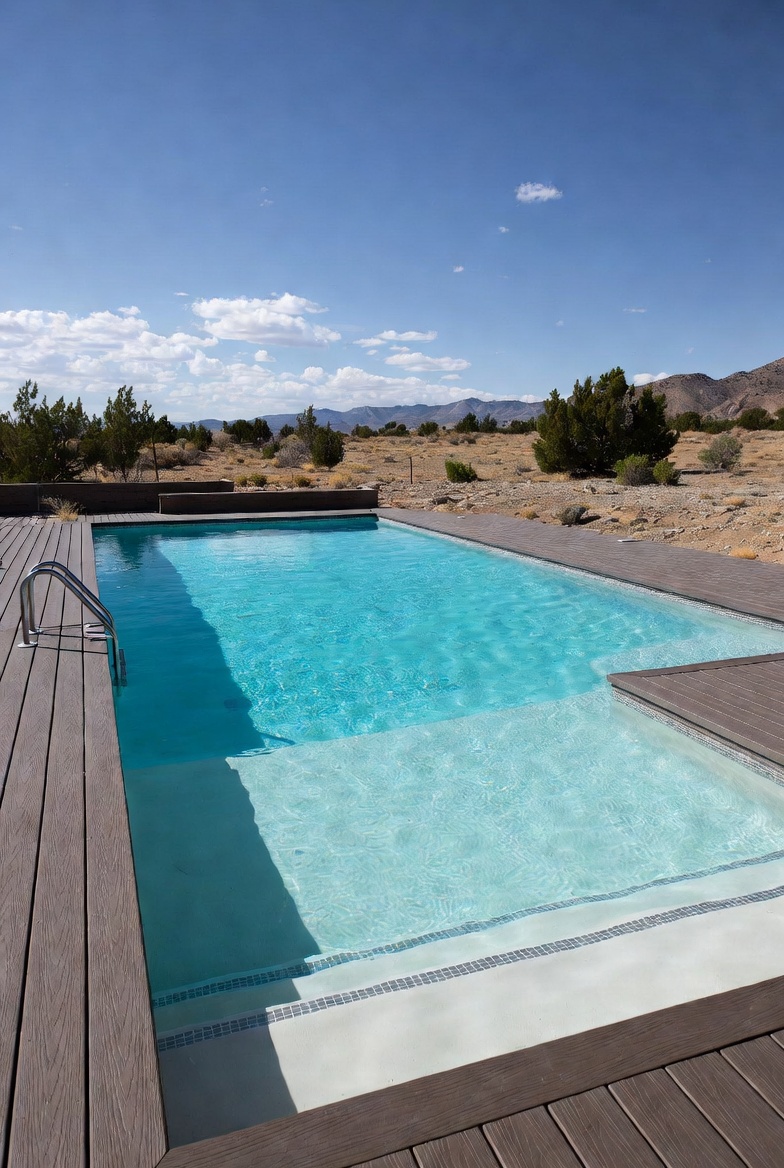
Three habits add the most life to a St. George pool finish: keeping calcium hardness in the 250–350 ppm range, brushing weekly, and draining/refilling every 3–5 years to reset accumulated TDS.
The single most damaging mistake is letting pH stay outside 7.4–7.6 for extended periods. Aggressive water at pH 7.0 will etch a new finish in months.
The five habits that matter most
- Hold pH at 7.4–7.6. Single biggest factor. Drift up causes scale; drift down causes etching.
- Keep calcium hardness 250–350 ppm. Below 200 is aggressive; above 400 causes scale.
- Brush the surface weekly. Prevents scale buildup and removes debris before it stains.
- Don't shock the pool unnecessarily. High chlorine concentrations damage finish over time.
- Drain and refill every 3–5 years. Resets accumulated TDS, cyanuric acid, and dissolved solids.
These are the high-leverage habits. Everything else (fancy cleaning chemicals, automation systems, etc.) is incremental. If you do these five things consistently, your finish will outlast the average.
Chemistry targets to defend
| Measure | Target | Why it matters |
|---|---|---|
| pH | 7.4 – 7.6 | Outside this range = etching or scale |
| Total alkalinity | 80 – 120 ppm | Buffers pH from drifting |
| Calcium hardness | 250 – 350 ppm | Stops finish from dissolving into water |
| Cyanuric acid | 30 – 50 ppm | Stabilizes chlorine; above 100 ppm reduces sanitizer effectiveness |
| Free chlorine | 1.0 – 3.0 ppm | Sanitizes without damaging finish |
| Salinity (saltwater) | 2,700 – 3,400 ppm | Per manufacturer spec |
Test weekly. Adjust gradually. Sudden big changes do more damage than steady-state slightly-off readings.
Brushing — what people get wrong
Brushing is the most undervalued maintenance habit. It does three things at once:
- Removes soft scale before it hardens. Easier to brush off fresh deposits than to chemically remove them later.
- Suspends settled debris so the filter can capture it instead of letting it stain the surface.
- Promotes water circulation near the surface, where chemistry matters most.
What people get wrong
- Only brushing what they can see from the deck. Steps, benches, and the deep end need it most.
- Using the wrong brush. Plaster and quartz: stiff nylon. Pebble: nylon or stainless wire. Fiberglass: soft nylon only.
- Brushing once a month. Weekly is the minimum to matter.
- Skipping the waterline. Most scale builds at the water surface where evaporation concentrates minerals.
Drain-and-refill cadence
St. George is harder on pool water than most markets because of high evaporation. As water evaporates, the minerals stay — meaning calcium hardness, total dissolved solids (TDS), and cyanuric acid all creep up over years.
Rule of thumb: if your TDS reading is above 2,500 ppm, your cyanuric acid is above 80 ppm, or your calcium hardness is above 500 ppm, it's time to drain and refill.
Typical cadence in St. George: partial drain and refill every 2–3 years, full drain and refill every 4–5 years. Don't skip it — accumulated TDS and cyanuric acid make chemistry harder to control and accelerate finish wear.
An empty pool is structurally vulnerable — groundwater pressure can push it out of the ground. In St. George that risk is low because of our soil, but it's still bad practice. Drain in spring or fall and refill within 72 hours.
Seasonal care in St. George
Spring (March–May)
- Reset chemistry after winter — check all parameters.
- Inspect surface for any winter damage (rare but worth checking).
- Test cyanuric acid; if approaching 80 ppm, plan a partial drain-and-refill.
Summer (June–September)
- Test chemistry weekly minimum — heat and high use change things fast.
- Brush twice weekly during peak use.
- Monitor evaporation. Top off as needed to keep skimmer level.
- Watch for monsoon storms — they crash pH overnight. Test after every rain event.
Fall (October–November)
- Best time to do a partial drain-and-refill if needed.
- Brush thoroughly before winter — clean surface holds chemistry better.
- Adjust chemistry to slightly higher pH and lower chlorine if you're closing for the winter.
Winter (December–February)
- If the pool stays open: test chemistry every 2 weeks; brush every 2 weeks.
- If you cover and close: drain to below skimmers, blow out lines, add winter chemicals per pro recommendation.
A qualified local licensed contractor will contact you to get your quote started. No obligation.
Frequently asked questions
Can I extend the life of older plaster, or only new finishes?
Both, but new finishes benefit more. Good maintenance on an existing 8-year-old plaster might give you 2 extra years before resurfacing. Same maintenance on a fresh resurface adds 3–5 years of life.
Is it worth buying a pool maintenance service in St. George?
For most homeowners, yes — at least seasonally. Monthly chemistry visits ($75–$150) cost less than the long-term cost of poorly-balanced water. Weekly full-service ($150–$350/month) is overkill unless you don't want to think about the pool at all.
Do automation systems help?
Salt cells, automatic chlorinators, and pH controllers do help maintain steadier chemistry — which absolutely extends finish life. But they're $1,500–$5,000 upgrades. Worth it if you're keeping the pool 10+ years; less so if you're selling soon.
What chemicals damage pool finishes the most?
In order: muriatic acid (when added directly without dilution), calcium hypochlorite ("granular shock") when broadcast over the surface, and any chemical with phosphates or copper-based algaecides used aggressively. Most well-known brands are fine in proper doses.
Free quote for your pool.
A qualified local licensed contractor will contact you to get your quote started. No pressure, no obligation.
Get My Quote