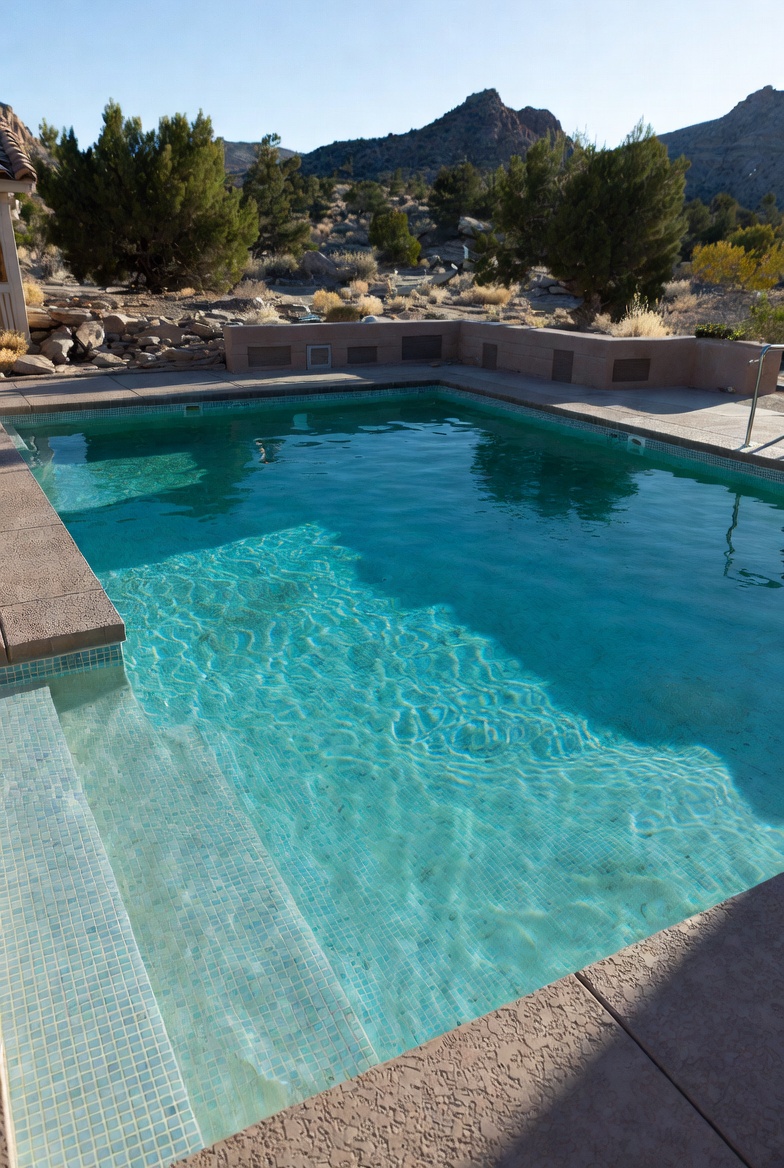
Brush the entire pool surface daily for the first 14 days. Test and adjust water chemistry daily for at least 7 days.
Don't use automatic vacuums, don't shock the pool, and don't let pH or alkalinity drift during the cure window.
Why the first 30 days matter
When your refilled pool looks finished on day 7, the new surface isn't actually hardened yet. Plaster, quartz, and pebble finishes all cure underwater over roughly 28 days. During that window:
- The surface is soft enough to be permanently marked by automatic vacuums.
- Plaster dust is released as the surface hardens — if it settles, it becomes permanent staining.
- pH and alkalinity drift naturally as the new surface stabilizes — without correction, the water can turn aggressive and etch the new finish.
- Calcium hardness needs to be brought up gradually; jumping it too fast causes scaling that's permanent.
Done well, the cure window adds decades to your finish's life. Done poorly, it can leave you with a surface that looks worse at year 3 than your old plaster did at year 8.
Day-by-day care plan
Days 1–7
- Brush the entire pool surface daily. Wall to wall, top to bottom. Use a stiff nylon brush (or wire brush for pebble finishes only — never on plaster).
- Test water chemistry daily. pH, alkalinity, calcium hardness, chlorine.
- Adjust pH downward as needed. Cure releases calcium hydroxide, which raises pH. Use small acid additions — never large doses.
- Run the filter 24/7 for the first week.
- No swimming for the first 3 days (most contractors recommend this).
- No automatic vacuums. Period.
Days 8–14
- Continue daily brushing.
- Test chemistry every other day.
- Start building calcium hardness gradually toward the 250–350 ppm target — small additions over several days.
- Continue filter run-time at 18+ hours/day.
- Swimming OK now but no rough play or diving.
Days 15–28
- Brushing every other day.
- Chemistry testing 2–3 times per week.
- Filter back to standard run time (8–12 hours/day depending on usage).
- Still no automatic vacuums until day 28.
Day 28+
Surface is fully cured. Resume standard pool maintenance. Automatic vacuums OK. Normal play and use.
Chemistry targets during cure
| Measure | Target | Notes |
|---|---|---|
| pH | 7.4 – 7.6 | Adjust daily during first week |
| Total alkalinity | 80 – 120 ppm | Drifts upward during cure |
| Calcium hardness | Build to 250–350 ppm over 14 days | Don't jump it suddenly |
| Free chlorine | 1.0 – 3.0 ppm | Run lower than usual; high chlorine is hard on fresh plaster |
| Cyanuric acid | 30 – 50 ppm | Add gradually after day 7 |
The seven things never to do during cure
- Don't use an automatic vacuum. Wheels and brushes wear permanent tracks into soft new surface.
- Don't shock the pool. High chlorine concentrations damage fresh plaster.
- Don't let pH drop below 7.2. Aggressive water etches the new surface within hours.
- Don't let calcium hardness stay below 200 ppm. Same effect as low pH — water becomes aggressive.
- Don't add salt to a saltwater system until day 28. Salt-cell electrolysis around fresh plaster causes uneven curing.
- Don't power-wash or use abrasive cleaners. The surface is too soft.
- Don't skip days of brushing. Plaster dust that settles becomes permanent staining.
Who should manage cure — you or the contractor?
Two valid models:
Contractor-managed (recommended for first-time owners)
Most quality St. George contractors offer cure-period management as part of scope, or as a $200–$500 add-on. They come back 3–4 times during the 28 days, adjust chemistry, and handle brushing. Worth it if you're not confident in pool chemistry yourself.
Owner-managed (for experienced pool owners)
You handle brushing and chemistry per the contractor's written plan. Cost: about $80–$120 in chemicals and 20–30 minutes per day for the first 2 weeks. Get the cure plan in writing at signing — don't accept verbal-only instructions.
A qualified local licensed contractor will contact you to get your quote started. No obligation.
Frequently asked questions
Can I swim during the 28-day cure window?
Yes, after day 3. No rough play or diving for the first 14 days. The surface is soft enough that pool toys and noodles are fine, but anything abrasive can leave marks.
What if I notice spots or streaks during cure?
Brush them out promptly — they're usually plaster dust that hasn't been suspended yet. If brushing doesn't remove a stain, contact the contractor within the workmanship-warranty window (usually 30–90 days) to address it.
Do pebble finishes need the same cure care as plaster?
Yes — the cement matrix between pebble aggregate is still curing. Daily brushing is even more important to clear pebble crevices of release dust.
Can I add a pool cover during cure?
Yes after day 7. Some contractors prefer no cover for the first week so the surface can off-gas. Confirm with yours.
Free quote for your pool.
A qualified local licensed contractor will contact you to get your quote started. No pressure, no obligation.
Get My Quote