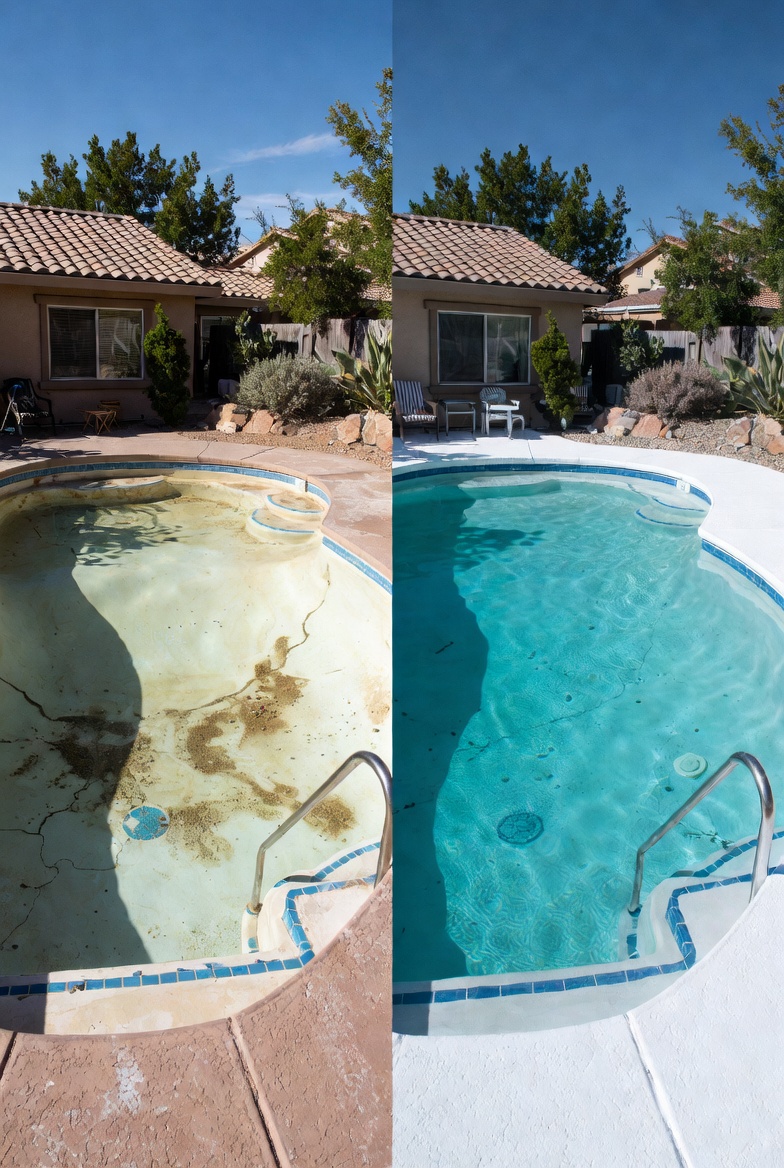
Hairline web-like crazing is cosmetic and normal on plaster older than 5 years. No action needed unless it's affecting water clarity.
Cracks wider than a credit card edge are structural and need to be addressed — usually by stitching during a resurface, occasionally as a standalone repair.
Two kinds of pool plaster cracks
When homeowners ask "why is my pool plaster cracking," the answer almost always splits into two categories with very different implications.
- Cosmetic crazing — fine, web-like surface cracks visible up close but not affecting structure. Almost all older plaster has some.
- Structural cracks — clean, linear cracks wider than a fingernail edge. May leak water; may indicate substrate movement.
The first step in diagnosis is figuring out which kind you have.
Cosmetic crazing — usually fine
Crazing looks like a spider web of fine cracks, usually 1–3 inches across, scattered across the plaster surface. It develops over years as the plaster slowly shrinks against the gunite shell.
How to identify:
- Cracks are very thin — narrower than a credit card edge.
- Pattern is web-like or random, not following a straight line.
- Cracks don't extend through the plaster (you can't push anything into them).
- Water clarity is fine; no visible water loss.
What to do: nothing, usually. Crazing is cosmetic and doesn't progress to structural damage. It does become more visible as plaster ages — which can be one of the signals it's time to consider resurfacing for aesthetic reasons.
Structural cracks — when to act
Structural cracks are different. They're linear, often run for several feet, and can sometimes be felt with a fingernail or filled with debris.
How to identify:
- Crack is wide enough that you can feel an edge with a fingernail.
- Length is meaningful — 6 inches or more along a single line.
- May extend through the plaster into the gunite shell underneath.
- Sometimes visible as a dark line under water (debris collecting in the crack).
- May correlate with water loss — pool dropping more than 1/4 inch per week beyond normal evaporation.
What to do: get it diagnosed. A structural crack can be a one-time settlement issue or an ongoing problem with the pool's substrate. Either way, it should be stitched before resurfacing — and if water loss is happening, addressed sooner.
Normal St. George evaporation is roughly 1/8 to 1/4 inch per day. If you're losing more than that — especially if your pool drops noticeably more than your neighbor's — you may have a structural leak.
What causes plaster to crack in St. George
Substrate movement
Soil expansion and contraction stresses the gunite shell, and the plaster cracks where the shell moves. St. George's expansive soils (especially in the older Bloomington and Washington Fields areas) can cause minor movement over years.
Temperature swings
St. George's day-night temperature range is wider than most markets. Summer days at 105°F followed by 70°F nights cycle the plaster thermally — over time, that cycling creates micro-cracks.
Water chemistry
Aggressive water (low pH, low calcium hardness) etches the plaster from the surface in. Over time, etched plaster develops shallow cracks and pit-like spots.
Application errors
Plaster applied too thin, with too much water in the mix, or during extreme temperatures will craze more aggressively. This is more common in plaster jobs from years ago when application standards were looser.
Age
Even properly-applied, well-maintained plaster develops crazing eventually. In St. George that timeline is typically 5–7 years for first crazing to appear, 10+ years for full webbing.
Fixes by crack type
Cosmetic crazing
No fix needed. If crazing is bothering you aesthetically, the answer is resurfacing — which you may be due for anyway.
Single structural crack, no water loss
Stitching: the crack is v-cut and filled with flexible epoxy or pool-grade caulk. Can be done as a standalone repair ($300–$600) or rolled into a resurface for less.
Multiple structural cracks
Usually a sign of bigger substrate or surface issues. Diagnosis first, then resurfacing with proper crack treatment.
Active water leak
Pressure test the plumbing first to rule out pipe leaks. If plumbing is sound, the leak is through a structural crack — needs to be located (sometimes with dye testing) and stitched. Don't wait — losing pool water into your soil can undermine the structure.
A qualified local licensed contractor will contact you to get your quote started. No obligation.
Frequently asked questions
Are all pool cracks bad?
No. Hairline crazing is cosmetic and present on most pools older than 5–7 years. Only structural cracks (wider than a credit card edge) need attention.
Can I patch a pool crack myself?
For cosmetic crazing: no patch needed. For small structural cracks above the waterline: DIY pool plaster patches can buy time. For below-waterline cracks or any crack with water loss: hire a pro — getting the fix right matters.
Will resurfacing fix existing cracks?
Yes — when done correctly. The existing surface is removed, cracks are v-cut and stitched, then a new finish goes on. Make sure the contractor's quote explicitly includes crack stitching before applying the new surface.
Why do plaster cracks come back after resurfacing?
Almost always because of underlying substrate issues that weren't addressed. If the gunite shell is shifting because of soil movement, new plaster will crack along the same lines as the old. Stitching alone doesn't fix moving substrate.
Free quote for your pool.
A qualified local licensed contractor will contact you to get your quote started. No pressure, no obligation.
Get My Quote